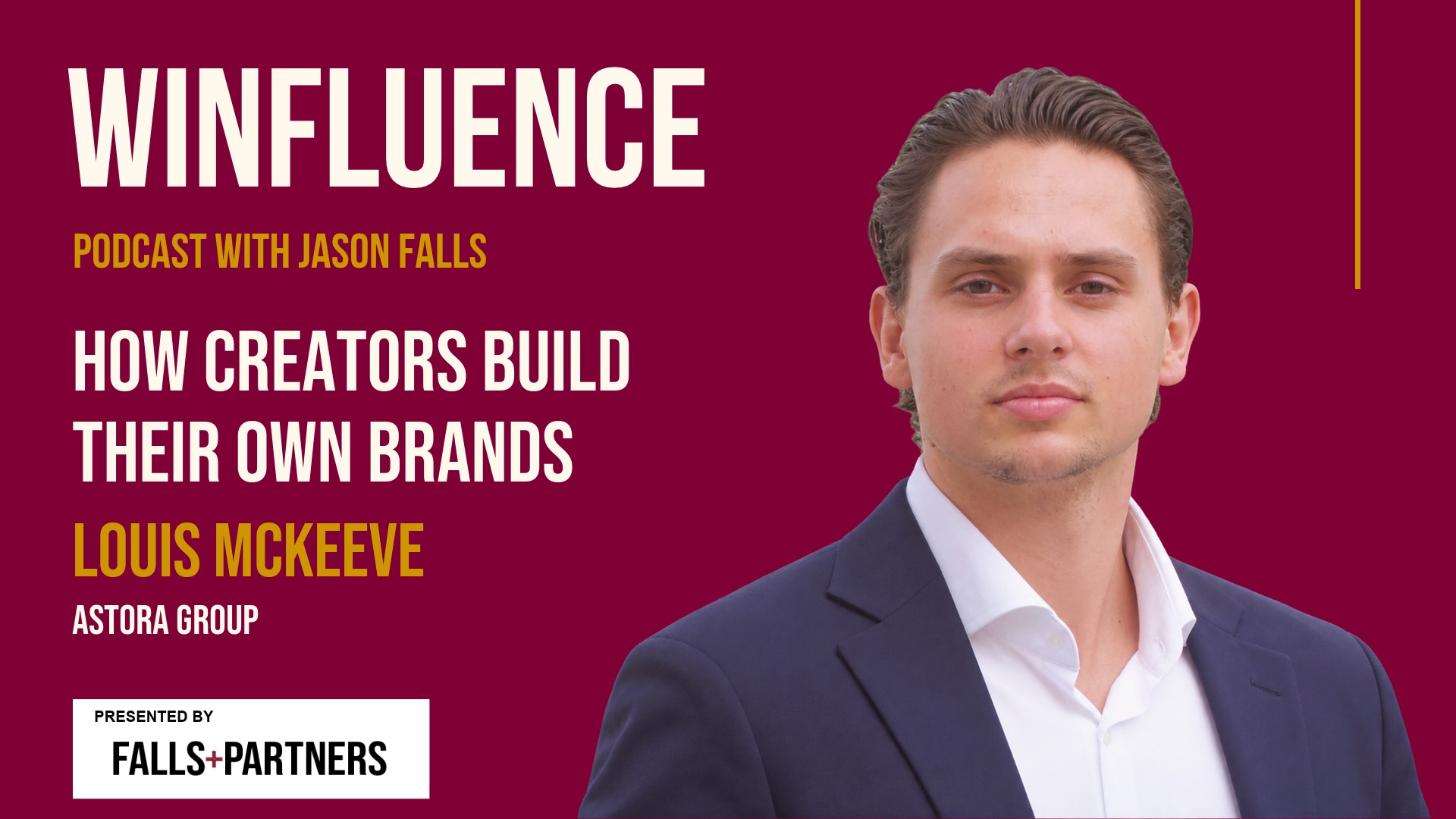
Watch the full Winfluence episode or listen on Simplecast.
If you teach people to make bread and they keep asking about the slicer in your videos, you’ve got a better starting point for a product than a spreadsheet full of trending items. You know what people are trying to do. You know where they get stuck. And they’ve already told you what they want to know about the tool.
That’s the kind of opportunity Louis McKeeve and I talked about on Winfluence. Louis founded Astora Group, whose Thrive Creators business helps creators develop and run e-commerce brands. One of the creators he works with is Mel of The Homestead Fam. She already had homesteading books. Kitchen products such as bread slicers and baking pans fit the work she was doing and the skills people came to her to learn.
Louis also discussed Pitchlo, a platform for creators to find UGC jobs and pitch brands.
If you’re a creator looking to build a brand of your own, start with a problem people already bring to you. Choose one offer you can test at a manageable scale, see whether people pay for it, and use what you learn before putting serious money into inventory.
Choose a product you can teach people to use
The thing I like about the bread slicer example is how easy it is to imagine Mel showing it in a video she would have made anyway. She can bake a loaf, show how she slices it, and explain why the tool helps. If you take the sales link out of that video, the audience still gets something useful.
Try that with your own idea. Look through the questions people ask in comments, replies and direct messages. Pull out the ones you’ve answered more than once. Which of those questions would you be happy to build an entire demonstration around? Which would a product make easier to answer?
That exercise can also tell you what to leave alone. If the only way to explain the product is to spend the first half of the video explaining why you’re selling it, keep looking.
Ask what people want. Then see what they’ll pay for.
Louis suggested starting with a poll, a giveaway, or a small paid product. Each gives you a different piece of information. A poll tells you what sounds interesting. A giveaway can show you who will take an extra step to try something. A paid test asks people to make the same kind of decision your eventual business will depend on.
Say your audience keeps asking for help getting started with sourdough. You could run a small paid class and see which part of the process attendees struggle with. If they pay for help with timing and troubleshooting, that tells you something about the problem they value solving. You’d still want to test demand for a physical kit before ordering one in bulk.
Decide ahead of time what result would justify the next step. Consider what you’ll earn per sale after costs and how much inventory you can afford to hold if orders come in slowly. That gives you a more useful decision than looking at a follower count and guessing how many people might buy.
Give affiliates something worth showing
Louis told me his team helped design products and worked with creator affiliates on TikTok. Thrive Creators’ case study on The Homestead Fam explains how the team ran the shop and affiliate program. What stood out was his description of the affiliates closest to The Homestead Fam. They understood what Mel was building and could see where the products fit in their own content.
If you’re at that stage, give an affiliate one real customer question to answer. For the bread slicer, it might be how to get even slices from a loaf you’ve just baked. Let the creator show how they use the tool and explain what they’d tell someone who asked about it. That gives a buyer something to judge and the affiliate a reason to make the video beyond collecting a commission.
That’s also where I see a connection to search. People already ask those questions before they buy. A clear demonstration gives them an answer they can find and use. I’ve written more about how creator videos can answer buying questions in AI search.
Keep the promise that earned the audience
Louis and I talked about what happens when a brand needs to grow and the creator wants to stay true to the work people originally followed. Every new product creates more decisions about what to promote, what to stock and what customers will expect afterward.
I’d start with this question. If someone has followed your work for a year, what would they expect you to get right about this product? The answer should help you decide how it works, how you talk about it, and which creators you ask to demonstrate it.
Before you open a store or order your first batch, write down three questions your audience asks repeatedly. Choose one you can build a small paid offer around. Put it in front of the people who asked. Their response will give you a better basis for your next decision than your reach alone.