
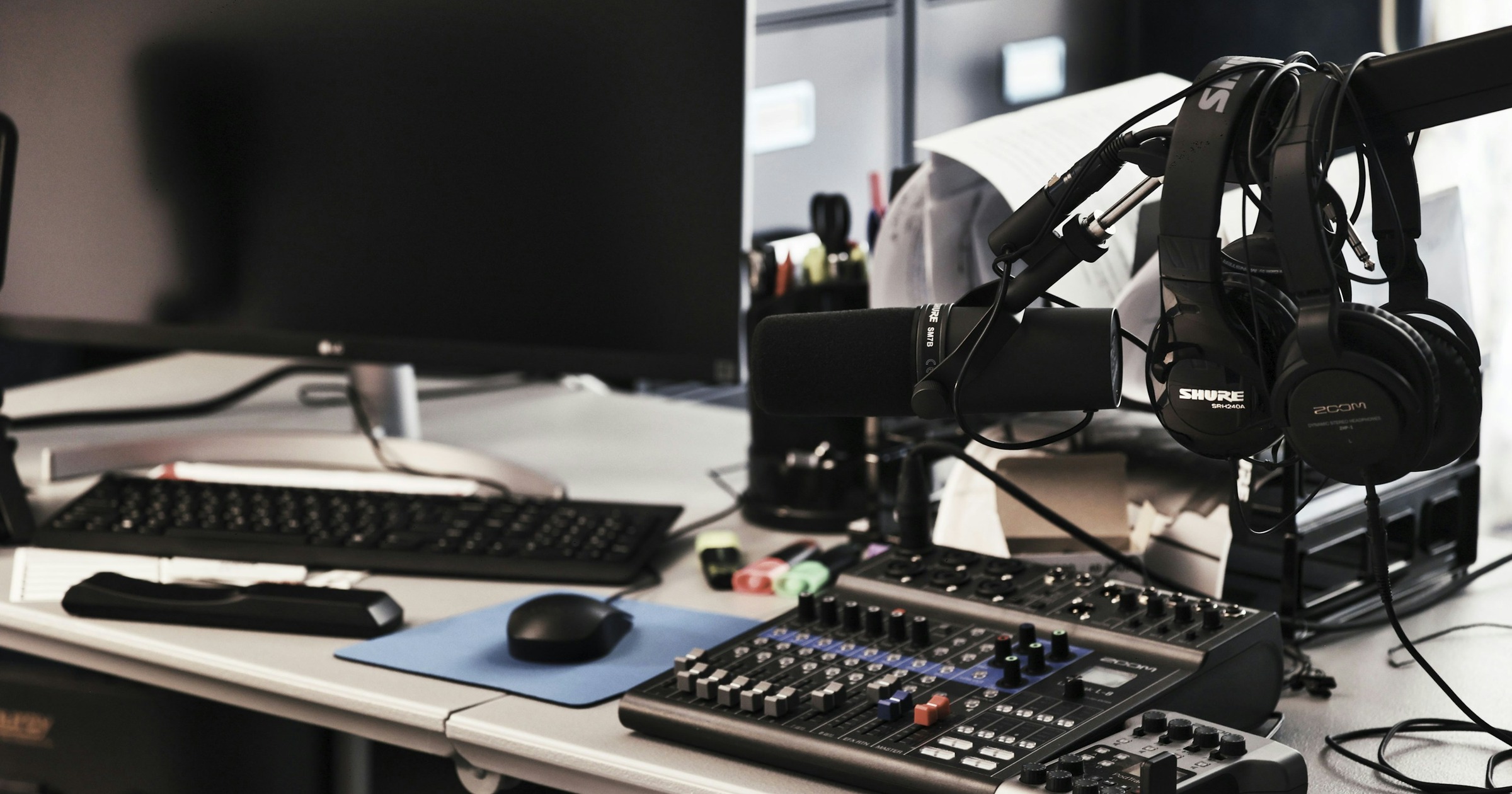
Photo by DANIEL HAY on Unsplash.
The recording is edited. Now who gets the episode out the door?
That is the question I would put near the top of any conversation about hiring a podcast producer.
Audio editing matters. So do pacing, a clean video edit and making sure the guest’s name is spelled correctly. But a finished media file still leaves a business with decisions, assets and publishing work.
If your marketing manager receives an MP3 and then spends the afternoon writing show notes, finding a thumbnail, checking captions and logging into publishing accounts, you have bought one part of the job. That may be exactly what you need. It is worth knowing before you approve the quote.
Podcast editing turns recordings into finished audio or video files. Managed podcast production carries the episode through the agreed supporting assets, quality checks, approval process and publishing steps. The right choice depends on which responsibilities your team can reliably own.
What does podcast editing include?
A typical editing assignment focuses on the media itself: cleaning up sound, improving pacing, incorporating your supplied intro and outro, and preparing the final audio. A video assignment can add camera switching, a branded presentation and an edited video master.
The exact work depends on the quote. Removing an obvious false start is a different assignment from rebuilding a conversation, repairing damaged sound or creating elaborate motion graphics.
Editing can be a sensible purchase when you already have someone responsible for the rest of the show. Perhaps your team writes the episode page, makes the artwork and publishes without a last-minute scramble. There is no reason to replace a process that works.
What does managed podcast production add?
Managed production gives the surrounding release work an owner. At Falls+Partners, that includes edited media, reviewed show notes and an AI-assisted transcript checked by a person, episode artwork, captioned clips, and publishing after your approval. Audio-plus-video plans include full-episode video editing and YouTube publishing; audio-only plans use branded captioned audiograms for their clips.
That is a defined production service. You still provide the expertise, recordings, required assets and timely feedback. Guest booking, original research and scripting, equipment, hosting subscriptions, paid promotion and social posting are separately scoped. Editorial consultation is included only in our Weekly tier. We do not offer calendar coordination or ongoing editorial planning in these packages.
The useful distinction is responsibility. Who prepares each deliverable, who reviews it, and who presses the publishing button?
Compare the work, line by line
This table describes F+P’s editing-only and managed services. Another production company may draw the boundaries differently.
| Responsibility | Editing only | Managed production |
|---|---|---|
| Audio cleanup, pacing and final audio | Included in the agreed edit | Included |
| Full-episode video edit | Audio + video editing service | Audio + video plans |
| Show notes, reviewed transcript and episode artwork | Separately scoped | Included |
| Captioned clips | Separately scoped | 3, 7 or 10 per episode, by tier |
| Podcast-feed publishing | Your team, or a separate assignment | Included after approval |
| YouTube publishing | Your team, or a separate assignment | Audio + video plans |
| Social posts and paid promotion | Separately scoped | Separately scoped |
| Recordings, expertise and consolidated feedback | Your team | Your team |
Count the work that stays inside your business
Price comparisons get more useful when you include your team’s time. For each episode, list the jobs left after the editor delivers: written assets, artwork, clips, quality checks, uploading and release verification.
Here is a planning example, not a production quote: if those jobs take three hours and your internal budgeting rate is $75 per hour, that is $225 of staff capacity per episode. Your actual time and rate may be very different. The point is to put a number beside the work instead of treating it as free.
Compare that workload with the scope of a managed package. You may still prefer editing only. You will be making the choice with a fuller picture of what your team is taking on.
For the broader budgeting discussion, read our business podcast production cost guide. At F+P, standard audio editing starts at $149 per episode and audio-plus-video editing at $249. Managed production starts at $399 per month for audio only or $599 for audio and video. Those starting monthly plans include one episode per month; cadence, scope and deliverables matter when comparing them with per-episode editing.
Standard episode scope covers up to 45 raw minutes and one consolidated revision round, with limits on speakers and camera feeds. Complex repair or custom work is quoted separately. Check the current production packages and full terms before budgeting.
A managed process still needs your approval
A producer can make the release process easier. Your producer cannot supply your subject-matter judgment or decide on your behalf that a sensitive client example is ready for the public.
At kickoff, agree who reviews the package, how feedback is consolidated and when complete recordings are due. For our standard process, complete files should arrive at least seven business days before release. First review is within five business days of receiving complete files, with two more business days allowed for revisions and publishing. Timely client feedback is part of making that work; holidays and exceptions need agreement in advance.
When you compare podcast production companies, ask them to walk through an episode from file handoff to verified release. Ask what happens if a file is missing, the recording needs unusual repair or an approval arrives late.
Choose the handoff your team needs
- Choose editing only when someone on your team reliably owns the written assets, artwork, clips and publishing.
- Choose managed production when you want one accountable production partner handling the agreed release package while your team records and reviews.
- Scope a launch separately when the show still needs positioning, format, artwork, recording setup and distribution accounts established.
That last distinction matters. Managing an established show and helping create a new one involve different work. Our case study of The Move In Senior Living Marketing illustrates the broader business role a podcast can play. Production supports the platform; the host’s expertise, relationships and consistent contribution give people a reason to care.
My recommendation: before asking, “Can you produce my podcast?”, write down what you want to stop managing yourself. Then ask each provider to identify the steps they will own and the steps that stay with you.
Want to make that list together? Tell Falls+Partners about your podcast and request a production plan.
Questions businesses ask about editing and production
Is podcast editing the same as podcast production?
The terms are used differently by providers. Editing usually focuses on finished audio or video. F+P’s managed production also includes supporting episode assets and approved publishing. Ask for a written list of deliverables and responsibilities.
Can I hire someone just to edit my podcast?
Yes. F+P offers editing-only services and stand-alone clips. Editing-only pricing excludes publishing, written assets and clips unless those are separately agreed.
Does managed podcast production include posting to LinkedIn and Facebook?
Our standard managed plans prepare captioned clips, but social posting and full promotion campaigns are separate services. Podcast-feed publishing is included, with YouTube publishing on audio-plus-video plans.
Service scope and starting prices checked November 3, 2026 against F+P’s published podcast-production services. The staff-time calculation is an illustrative budgeting example, not measured client data.